
How do grant reports impact future funding?
How do grant reports impact future funding?
Many nonprofits focus so much energy on researching, writing and submitting grant applications that they forget one of the most important parts of the grant process begins after the award arrives.
Winning the grant is not the finish line. In many ways, it is the beginning of the relationship.
Post-grant stewardship is one of the most overlooked parts of nonprofit fundraising, yet it can have a major impact on whether your organization is invited to apply again, receives increased funding in the future, or builds a long-term relationship with a funder.
Strong grant management is not just about grant writing. It is about how you honor, report on, and steward every grant you receive.
Let’s talk about why post-grant support matters and how it directly affects future funding.
What Is Post-Grant Stewardship?
Post-grant stewardship refers to everything your nonprofit does after receiving grant funding to fulfill the funder’s requirements and maintain a strong relationship.
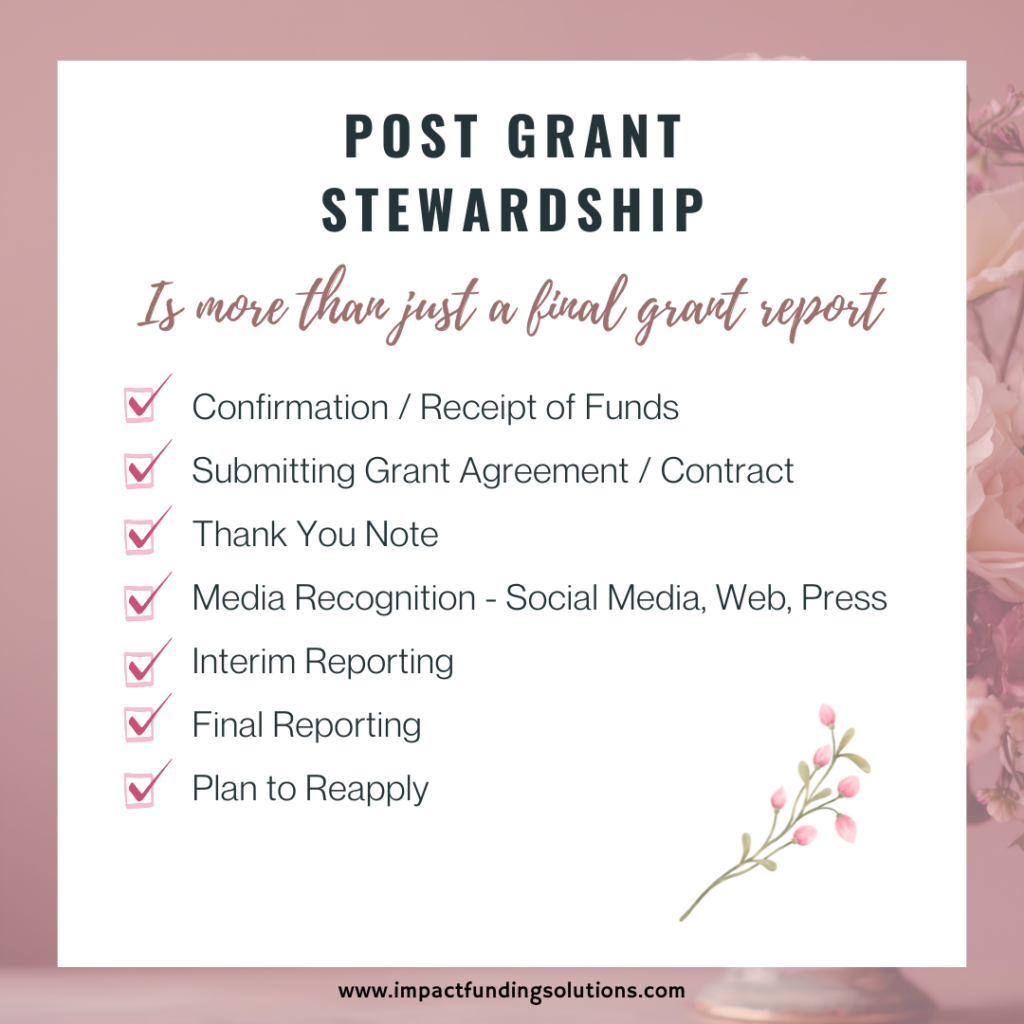
This often includes:
- formal grant reports
• interim progress updates
• proof of use of funds
• acknowledgement of receipt of the grant
• thank-you letters or handwritten cards
• media recognition and public acknowledgment
• final outcome reporting
• reapplication planning for future cycles
Funders are not simply giving money. They are investing in your mission and trusting your organization to use those funds responsibly.
How you respond to that trust matters.
Grant Reports Are More Than Paperwork
One of the most common post-grant requirements is a grant report.
This may include:
- financial reporting
• program outcomes
• participant numbers
• stories of impact
• photos or testimonials
• challenges and lessons learned
• how the grant dollars were specifically used
Many nonprofits view reports as an administrative burden, but funders see them as proof of stewardship.
A strong report tells a funder:
“We did exactly what we said we would do, and here is the impact your investment created.”
That builds confidence.
Confidence leads to future funding.
Acknowledgement Matters
Many funders also require some form of formal acknowledgement after a grant is awarded.
This may be:
- confirming receipt of funds
• submitting signed acceptance paperwork
• board acknowledgment
• grant agreement compliance documents
• proof of insurance or vendor documentation
These small administrative details matter more than many organizations realize.
Missing a simple requirement can delay payment, damage trust, or impact future eligibility.
Careful grant management protects these relationships.
Thank You Notes Still Matter
Sometimes the most powerful stewardship tool is the simplest one.
A handwritten thank-you card from your Executive Director, Board Chair, or even a participant impacted by the funding can leave a lasting impression.
Funders are people. They want to know their support matters.
A thoughtful thank-you creates warmth and relationship, not just compliance.
Many nonprofits build this into their internal grant process automatically, and it makes a difference.
Media Recognition Strengthens Relationships
Public recognition is another important part of post-grant stewardship.
This can include:
- a social media post thanking the funder
• a photo opportunity or check presentation
• a press release
• recognition in your newsletter
• inclusion on your website
• acknowledgment in your annual report
• event signage or sponsorship recognition
Many funders appreciate visibility, especially corporate and community funders.
Publicly celebrating their support shows gratitude and strengthens the partnership.
It also helps future donors and grant reviewers see that your organization is trusted and funded by others.
That social proof matters.
Reapplication Starts the Day the Grant Is Awarded
One of the most important parts of grant management is understanding that post-grant stewardship directly affects your ability to reapply.
Many grants are annual.
That means:
- the relationship matters
• reporting matters
• deadlines matter
• professionalism matters
Organizations that steward grants well are far more likely to receive repeat funding.
And repeat funding is where true sustainability begins.
Winning a grant once is good.
Becoming a trusted recurring grantee is transformational.
Repeat Funders Create Stability
Strong repeat partnerships with funders create:
- more predictable revenue
• stronger operating stability
• greater confidence in long-term planning
• opportunities for increased grant amounts
• easier approvals over time
• stronger community credibility
It is often much easier to secure a second or third grant from an existing funder than it is to constantly find new ones.
This is why post-grant stewardship should be treated as part of your fundraising strategy, not an afterthought.
How Our Team Supports Post-Grant Management
At Impact Funding Solutions, we believe grant work does not end when the award arrives.
Our grant management services include support with:
- grant reporting calendars
• deadline tracking
• report drafting and submission
• funder acknowledgment planning
• post-grant media recognition strategy
• annual report inclusion
• reapplication planning
• funder relationship management
Because the goal is not simply to win one grant.
The goal is to build sustainable, long-term funding relationships.
That is where real growth happens.
Final Thoughts
Post-grant stewardship is one of the strongest indicators of long-term fundraising success.
Funders remember organizations that communicate well, honor commitments, and show genuine appreciation.
They also remember the ones that disappear after the check arrives.
Every thank-you note, report, photo, and follow-up helps build trust.
And trust is what turns one-time grants into lasting partnerships.
If your nonprofit wants stronger grant results, start by looking at what happens after the award.
Because future funding often depends on how well you steward the last one.
Frequently Asked Questions
Do grant reports impact future funding?
Yes. Strong grant reporting builds trust with funders and significantly improves your chances of receiving repeat funding in future cycles.
What should be included in a post-grant report?
Most reports include financial use of funds, program outcomes, participant numbers, stories of impact, photos, testimonials, and measurable results tied to the original proposal.
Should nonprofits publicly thank grant funders?
Absolutely. Social media posts, newsletters, press releases, and annual report recognition help strengthen relationships and show appreciation.
Why is post-grant stewardship important?
Because grant funding is not just a transaction, it is a relationship. Strong stewardship leads to repeat grants, stronger partnerships, and long-term sustainability.
What is grant management?
Grant management includes the full lifecycle of grant work: research, writing, submission, reporting, stewardship, and reapplication planning—not just the application itself.
